
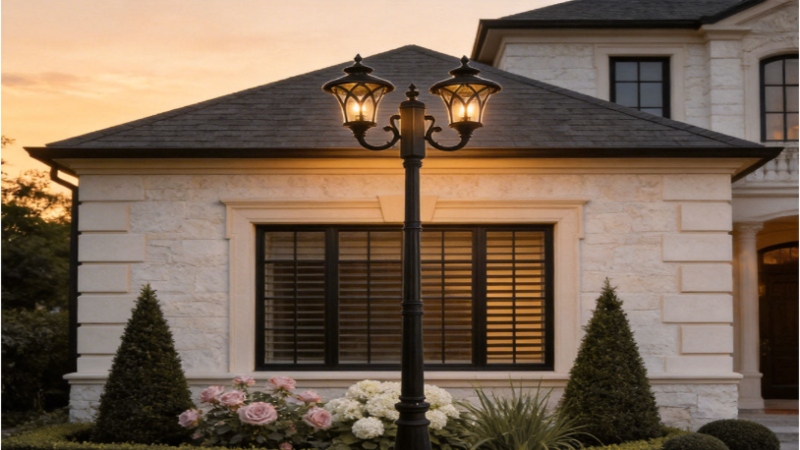
A long driveway can feel welcoming during the day and completely different after sunset. Curves disappear, the edge of the pavement becomes difficult to judge, and visitors may be unsure where to park or walk. The instinctive solution is often to install the brightest fixtures available, but excessive light creates its own problems. Glare can make hazards harder to see, disturb nearby bedrooms, and leave the property looking more like a parking lot than a home.
Good driveway lighting is not about making every square foot equally bright. It is about guiding movement, revealing changes in direction, and providing enough visibility for people to reach the house comfortably. The following planning steps can help homeowners create a safer and more attractive result.
Walk the Driveway After Dark
Begin with a nighttime inspection instead of planning entirely from a daytime photograph. Walk from the street to the house, then drive the same route slowly. Notice where the pavement narrows, curves, changes elevation, or meets a walkway. Pay attention to gates, retaining walls, steps, drainage channels, low branches, and landscaping that blocks existing light.
Mark each problem area on a simple property sketch. You may discover that the driveway does not need continuous illumination. A light near the entrance, another at a major turn, and a brighter zone around the parking area may provide better guidance than a long row of identical fixtures.
Give Each Light a Specific Job
Driveway lighting usually serves three purposes: navigation, security, and atmosphere. Separating these functions prevents one fixture from being expected to do everything.
Navigation lights reveal pavement edges, turns, and walking routes. Security lighting helps people identify visitors and activity near vehicles, gates, and entrances. Decorative lighting makes the landscape feel welcoming and can highlight trees, stonework, or architectural details.
Decide which purpose matters at each location before selecting a fixture. Tall street lighting designs can distribute light across wide residential driveways, entrance courts, and larger parking areas. Lower fixtures are often more appropriate near garden beds, paths, steps, and places where a tall pole would overwhelm the landscape.
A well-positioned post light can define a driveway entrance without flooding the entire property.
Choose Fixture Height According to Coverage
Fixture height affects both the size of the illuminated area and the amount of glare visible from a distance. Taller poles can spread light across a wider zone, making them useful at driveway entrances or open parking areas. However, they are also more visible from neighboring properties and upper-story windows.
Shorter posts and bollards create smaller pools of light closer to the ground. They can define pavement edges without dominating the view, but may require more fixtures to cover a long route. Very low path lights work well near walkways but may not provide enough guidance for drivers.
Review the fixture dimensions, beam direction, and expected coverage before choosing a height. Do not assume that a taller fixture is automatically more effective. The correct height depends on the driveway width, surrounding landscape, nearby buildings, and brightness of the light source.
Space Fixtures by What They Reveal
Perfectly even spacing is not always the best approach. On a straight driveway, a regular rhythm may look appropriate. On a curved or sloped driveway, the fixtures should respond to changes in direction and elevation.
Position lights so drivers can see the next important point along the route. The illuminated areas do not need to overlap completely. Small transitions between brighter and darker zones can preserve the residential atmosphere, provided the driveway remains easy to follow.
Avoid installing fixtures directly where vehicle doors open, delivery trucks turn, or snowplows and landscaping equipment operate. Set poles and bollards back far enough to reduce the risk of impact while keeping their light useful.
Control Glare Before Increasing Brightness
More lumens do not always create better visibility. When an exposed bulb or intense LED shines directly into the eyes, the pupil contracts and the surrounding area can become harder to see. This is especially noticeable when approaching a bright fixture from a dark road.
Choose shielded, diffused, or downward-directed fixtures where possible. Stand at the property entrance, inside nearby rooms, and at neighboring sightlines to determine whether the light source is directly visible. Frosted glass, internal diffusers, and carefully aimed optics can soften the effect.
Also check reflections from wet pavement, windows, polished gates, and light-colored walls. A fixture that looks comfortable on a dry evening may feel much brighter when rain or snow reflects the light.
Use a Comfortable Color Temperature
Very cool white light can make a residential landscape feel harsh and may create an abrupt contrast with warmer porch and window lighting. For many homes, warm white light around 2700K to 3000K produces a more inviting appearance while still providing useful visibility.
Consistency matters. If the driveway fixtures are warm white but the garage and porch lights are noticeably blue, the property can look visually disconnected. Keeping most visible exterior sources within the same general color-temperature family helps the entrance feel planned rather than assembled in stages.
Combine Tall and Low Lighting
A long driveway rarely needs one fixture type from beginning to end. A tall post light can mark the entrance or illuminate a broad turning area, while bollards or path lights guide the route toward the house. Wall-mounted fixtures can identify the garage, and step lights can make the final walking path safer.
This layered approach also reduces pressure on the tallest fixtures. Instead of increasing pole-light brightness to reach every corner, use targeted light closer to specific hazards and activities. A broader outdoor lighting plan can coordinate driveway fixtures with porch lights, wall lanterns, landscape lights, and illuminated walkways.
Select Controls Based on Real Use
Driveway lighting does not always need to operate at full brightness throughout the night. Photocells can switch fixtures on at dusk, while timers can reduce unnecessary operation after the household has settled. Motion sensors may be useful near gates, parking areas, or garages, but they require thoughtful placement.
A sensor aimed toward the street may activate whenever a vehicle passes. One positioned near moving branches can react repeatedly during windy weather. Test the detection range and angle, and make sure sudden illumination will not shine into bedroom windows or distract drivers.
For larger installations, consider dividing the lights into zones. Entrance markers can remain on during the evening while brighter parking-area fixtures operate only when needed.
Plan for Weather and Installation
Outdoor fixtures must be rated for the conditions they will experience. Check the wet- or damp-location rating, ingress-protection information, operating temperature, finish durability, and recommended installation method. Coastal air, heavy rain, snow, irrigation, and direct sun can all affect long-term performance.
Tall poles require secure foundations that account for soil conditions, wind exposure, fixture weight, and local requirements. Underground wiring must also be installed at the correct depth and protected from moisture and future landscaping work. Solar fixtures may avoid trenching, but they need reliable sunlight and should not be placed where trees or buildings shade the panel for most of the day.
Because pole installation involves structural and electrical considerations, consult qualified professionals and local codes before purchasing the final fixtures.
Test the Plan Before Installing Everything
Whenever possible, test one fixture or use temporary portable lights to approximate the proposed locations. View the property from the street, driveway, house, and neighboring sightlines. Confirm that drivers can recognise turns, pedestrians can find the walkway, and bright sources do not dominate the landscape.
The best driveway lighting feels quietly helpful. It shows people where to go, makes arrival more comfortable, and supports the architecture without turning night into day. By lighting important transitions instead of every empty area, homeowners can create a safer entrance that still feels like part of a private residence. Click for more details.