
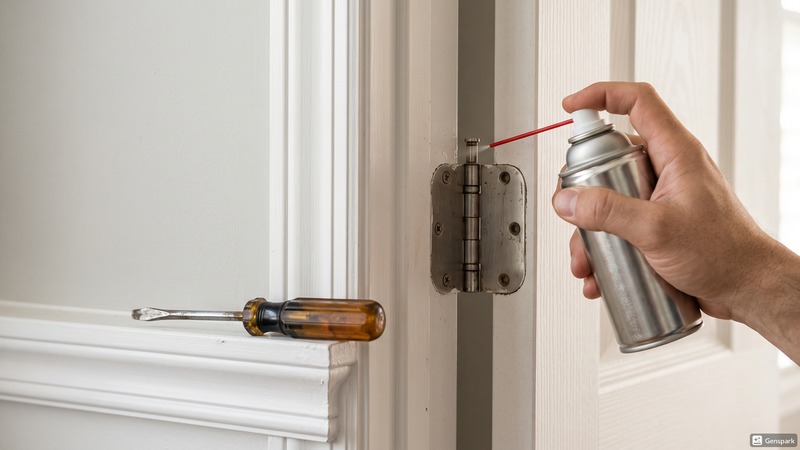
A squeaky door feels bigger than it is. The noise carries through the house at 6 a.m., you brace for it every time someone walks past, and yet the repair usually takes less time than making coffee. The cause is almost always simple: two metal surfaces inside a hinge are grinding together because the film of lubricant between them has dried out or filled with grit. Fix that contact point and the noise stops. Ignore it and the squeak becomes a creak, then a door that drags on the frame. How to Fix a Squeaky Door?
Quick Answer
Most squeaky doors need lubrication at the hinge pin, not a new hinge. Tap the pin out with a screwdriver and hammer, wipe off the old grit, coat it with white lithium grease or silicone spray, and slide it back in. One hinge at a time, and the squeak is usually gone in under five minutes. How to Fix a Squeaky Door.
Quick Facts: Squeaky Door Fixes at a Glance
Three problems cover nearly every noisy door. Dry metal inside the hinge barrel gives a sharp chirp on each swing. Loose screws give a creak under the door’s weight. A slab rubbing the frame gives a scrape that only happens mid-swing. Each has a different fix, and greasing a misaligned door just hides the scrape for a week.
| Question | Straight answer |
| Most common cause | Dry metal-on-metal contact at the hinge pin |
| Fastest fix | Silicone spray into the knuckle, then swing the door |
| Best long-term lubricant | White lithium grease |
| Fix that lasts months | Pull the pin, clean it, grease it, refit it |
| Time per hinge | Four to six minutes |
| Tools needed | Screwdriver, hammer, rag, lubricant |
| Still squeaking | Misalignment, frame rub, or a worn hinge |
Why a Door Squeaks at All
A door squeak is friction noise created where the hinge pin rubs inside the hinge knuckle — the barrel that holds the two hinge leaves together.
Spraying the outside of a hinge does very little, because the moving surfaces are hidden inside that barrel. The gap is small, so lubricant must be thin enough to travel into it, or the pin has to come out. When old grease mixes with dust and carpet fibres, it becomes a grinding paste that makes the noise worse. That is why doors often squeak louder a month after a quick spray: the spray softened the dirt but never removed it.
The Three Sounds and What They Mean
A sharp chirp that repeats with every swing points to a dry pin. A low creak at the half-open position usually means loose screws pulling out of the frame, so the hinge flexes instead of pivoting. A scrape or soft squeal near the door edge means the slab is rubbing the frame or weatherstripping — a fitting problem, not a lubrication problem. Fifteen seconds of listening saves you from fixing the wrong thing.
What You Actually Need Before You Start
Fewer tools than most videos suggest: a flathead screwdriver, a hammer, a rag, and a lubricant. A thin nail helps where the pin sits flush with the barrel, and a block of wood props the door so it cannot drop when a hinge comes apart.
The safety rule that matters is one hinge at a time. An interior door of 15 to 25 kilograms will stay put on the remaining hinges — but only while they are all fitted. On a heavy exterior or fire door, have a second person take the weight, because those slabs can swing free and damage the frame or your foot.
How to Fix a Squeaky Door in 5 Steps
- Find the noisy hinge. Swing the door slowly while a helper listens, or press a finger against each knuckle; the one that vibrates is the culprit.
- Support the door. Wedge folded cardboard under the outer corner so the hinge is not carrying the full weight with the pin out.
- Drive the pin upward. Lift the bottom cap with a flathead if there is one. Otherwise place the screwdriver under the pin head and tap gently upward, alternating sides so the pin does not jam.
- Clean, then lubricate. Wipe the pin until the grey paste is gone, then coat it thinly with white lithium grease or silicone spray. A light smear beats a thick blob, which only collects dust.
- Refit and test. Push the pin back down, tap it home through a cloth to protect the head, and swing the door through its full arc.
Step four is what makes the fix last. Lubricant applied over old grit recycles the problem, which is why so many doors start squeaking again within a month. If a pin is rusted solid, do not force it — add penetrating oil, wait twenty minutes, try again.
Best Lubricant for Squeaky Door Hinges
The right door hinge lubricant depends on where the door lives. White lithium grease suits hinge pins because it clings to metal and stays put for months. Silicone spray for door hinges is cleaner and faster — ideal for a rental, a fix before guests arrive, or hinges you cannot dismantle.
| Lubricant | Best for | Expected life | Watch out for |
| White lithium grease | Hinge pins, long-term quiet | 6-12 months | Sticky film that traps dust |
| Silicone spray | Quick fixes, tracks, plastic parts | 4-8 weeks | Washes off in wet weather |
| WD-40 (classic) | Cleaning gunk out of a hinge | 2-4 weeks | Thin film, not a true grease |
| Paraffin wax or candle stub | Indoor hinges, clean option | 3-6 months | Fiddly to apply, messy on paint |
| Graphite powder | Locks and latches | 6-12 months | Stains, so keep it off paint |
WD-40 for Squeaky Doors: The Honest Answer
WD-40 will quiet a hinge, but it is a solvent with light oil, not a load-bearing lubricant. It shines at dissolving gunk inside a knuckle, which makes it a useful first step before grease goes on.
Left alone, that thin film fades within weeks and the squeak returns. It also creeps onto painted surfaces and traps dust, which is how hinges end up looking permanently grimy. Treat it as a cleaner, not a cure.
What If the Squeak Isn’t the Hinge?
Check the screws first. A hinge whose top screw spins freely has stripped its hole, and the door is hanging lower than it should. Pack the hole with wooden matches dipped in wood glue, let it set, and drive the screw back in.
Next, inspect the space around the door to check for any gaps. Seasonal humidity swells timber, so a door that rubs in July may be fine in January; sanding the tight edge or adjusting the strike plate solves it. A squeal from the latch comes from the strike plate, not the hinge — a dab of grease on the latch bolt silences it. On newer doors, plastic friction pads at the top need silicone rather than grease.
How to Stop a Door From Squeaking for Good
Permanent quiet comes from maintenance, not one heroic repair. Twice a year, wipe each pin clean, re-grease it, and tighten any hinge screw sitting proud of the leaf. Keep indoor humidity reasonably stable, because constant swelling and shrinking slowly works screws loose.
Replace a hinge when the knuckle is visibly worn, rusted solid, or keeps coming loose despite new, longer screws. One hinge costs little compared with a door dragged out of square for a year.
The Full Fix Checklist
| Stage | Task | Done when |
| Diagnose | Identify the noisy hinge by feel or sound | Only one knuckle vibrates |
| Prepare | Support the door and gather tools | Door cannot drop with the pin out |
| Clean | Wipe the pin and barrel free of old grease | Rag comes away grey, not black |
| Lubricate | Apply a thin coat of grease or silicone | Even film, no visible blob |
| Reassemble | Tap the pin home, test the full swing | No noise at any angle |
| Verify | Check the other hinges and screws | No loose screws, no frame rub |
Frequently Asked Questions: How to Fix a Squeaky Door
How do I fix a squeaky door fast without removing the hinge?
Spray silicone or lithium grease into the gap at the top of the knuckle, then swing the door ten times to work it in. It silences the noise for a few weeks.
What’s the best way to keep a door from squeaking for good?
Clean the pin before lubricating it, then use a clinging grease rather than a thin spray. Repeat twice a year.
Which lubricant works best for getting rid of squeaky door hinges?
White lithium grease. It stays in place, handles the load, and lasts months. Silicone spray works when you cannot dismantle the hinge.
Can I use WD-40 on squeaky door hinges?
Yes, as a short-term fix or a cleaner before greasing. Its oil film fades in weeks and attracts dust.
Is silicone spray or WD-40 better for door hinges?
Silicone spray, because it lasts longer and leaves no oily residue. WD-40 is better at loosening rusted pins first.
How do I remove a hinge pin without damaging it?
Lift the bottom cap with a flathead, then tap the pin upward from below, alternating gentle strikes. Before removing the pin, secure the door to prevent it from bending.
Why does my door squeak again after a few weeks?
Usually because new lubricant went over old grit, or a thin spray was used instead of grease. A worn hinge also returns to squeaking fast.
Should I use oil or grease on door hinges?
Grease for the pin, because it stays where the load is. Light oil suits latches, but it drains off a vertical pin.
Final Thoughts: How to Fix a Squeaky Door?
A squeaky door is a friction problem with a five-minute solution: clean the contact point, choose a lubricant that stays, and put it exactly where the metal moves. Most people skip the cleaning and end up spraying the same hinge every month.
Start with the loudest hinge, use white lithium grease if you want quiet for a season, and check the screws before blaming the hinge for a scrape. If the noise survives all of that, the door is out of square rather than under-lubricated — a different fix entirely. Visit blogblueflamepublishing for more details.