
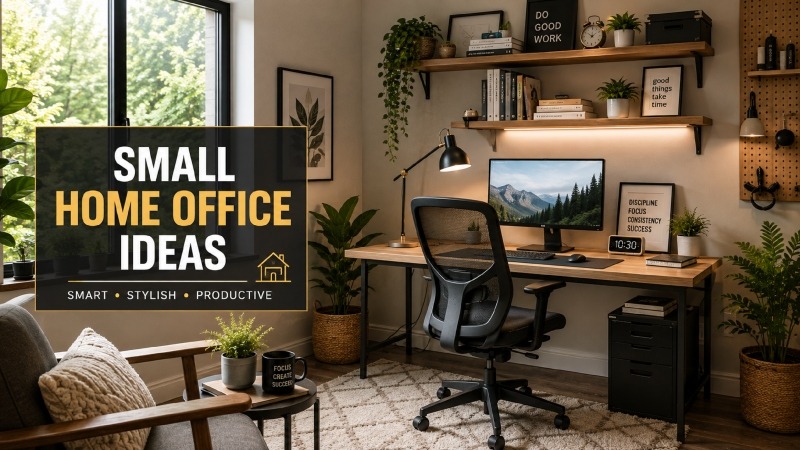
The way we work has changed for good, and your home has to keep up. More than half of remote-capable American employees now split their week between home and office, while another quarter work fully from home. At the same time, the average U.S. apartment has shrunk to under 900 square feet, which is smaller than a single-car garage. That collision between modern work habits and shrinking living space is why the Small Home Office Ideas has quietly become one of the most important rooms in any household. Small Home Office Ideas?
The encouraging news is this: a productive workspace does not depend on square footage. It depends on smart, measurable choices you can make this week. Whether you have a spare bedroom, a converted closet, or just a forgotten corner of the living room, the framework below will help you build a space that supports your body, sharpens your focus, and still feels like a place you actually want to spend eight hours a day.
Why Geometry Beats Square Footage Every Time
Most people blame stress for their afternoon backaches and creeping neck pain. More often, the real culprit is geometry. A chair three centimeters too low, a monitor two inches too high, or a desk so narrow that your wrists rest on its sharp edge will not hurt for ten minutes, but after a full week of eight-hour days the damage compounds. The same principle applies to lighting. A single overhead bulb casts harsh shadows across your screen and signals midday darkness to your circadian rhythm, producing the 2 p.m. slump you keep blaming on lunch.
Fixing these issues costs less than a year of coworking membership and takes less than a focused week. Every hour you invest now saves months of back pain, eye strain, and lost focus later.
Choose the Right Location Before You Buy a Single Thing
The most common mistake in small Home Office Ideas design is buying the furniture first. Reverse the order. Walk through your home with a tape measure and a notebook, and look for spots that offer four things at once: a flat wall at least 40 inches wide, an electrical outlet within six feet, room for a task lamp, and reasonable distance from your bed and refrigerator. Those two zones kill focus faster than any noisy neighbor.
Test your two or three best candidates for a few days using a folding table and chair. The corner that feels calmest at 3 p.m. almost always beats the one that looked best on a floor plan. You cannot measure how a space feels until you sit in it.
Compare Small Office Layouts at a Glance
Different homes call for different setups. Use this quick reference to match a proven layout to your space.
| Layout | Best For | Setup Cost |
| Cloffice (Closet Office) | Renters, small bedrooms | $200–$450 |
| Corner Nook | Living rooms, studios | $150–$350 |
| Wall-Mounted Drop-Leaf | Studio apartments | $100–$300 |
| Under-Stairs Office | Houses with dead space | $250–$700 |
| Window-Side Desk | Daylight lovers | $180–$400 |
Pick the row that matches your footprint and your lifestyle. Renters and travelers favor drop-leaf desks that fold flat. Homeowners often gravitate toward under-stairs builds that look custom and permanent. There is no wrong answer, only the one that fits your walls.
Get the Ergonomics Right the First Time
Your desk should be at least 47 inches wide and 24 to 30 inches deep. Anything narrower forces you to stack items vertically and crowds your wrists against your forearms. Seated desk height belongs in the 28 to 30 inch range, while standing desks should land at elbow height, usually 38 to 46 inches from the floor. If a full standing desk is out of budget, an inexpensive sit-stand converter placed on top of a regular desk delivers roughly 80 percent of the benefit at 20 percent of the cost.
Your monitor deserves equal care. The top of the screen should sit at or just below eye level, about 20 to 30 inches from your face. If you work on a laptop, add an external keyboard and a laptop stand. Typing on a flat laptop forces your neck into a forward tilt that quietly compounds every single hour.
For your chair, adjust the seat so your feet rest flat on the floor, your thighs are parallel to the ground, and your lower back is supported by the chair’s lumbar curve or a small cushion. Look for three non-negotiables: adjustable seat height, adjustable armrests, and firm cushioning that survives daily use without collapsing after six months.
Layer Your Lighting Like a Designer
A single overhead bulb is the fastest way to a headache. Aim for three layers instead. A task lamp of 500 to 800 lumens lights your work surface without glare. An ambient floor or wall fixture six to eight feet away softens shadows. Natural daylight from a nearby window regulates your body clock and lifts your energy by mid-afternoon.
Color temperature matters just as much as brightness. Cool white bulbs in the 4000K to 5500K range keep you alert during work hours. Warmer 2700K to 3000K bulbs help you wind down in the evening. Mixing both gives you a workspace that supports focus without feeling like a hospital corridor.
Quiet the Room Without Any Construction
Noise is the invisible productivity killer in Small Home Office Ideas, especially in apartments and townhouses. A thick rug under the desk absorbs footsteps and impact sound. Installing weather seals around the door helps reduce noise coming in from hallways. Floor-length curtains dampen window echo, and a bookshelf placed behind your chair breaks up the standing sound waves that muddy your video calls. None of these fixes require a contractor, and together they make your workspace sound as calm as it looks.
Tame Cables and Clutter Before They Multiply
Cables are the visual giveaway that separates a thoughtful workspace from a chaotic one. Mount a cable tray under the desk, use adhesive clips along the wall, and label both ends of every cord so the next rearrangement takes minutes instead of hours. Add a slim surge protector so your monitor, laptop charger, phone, and lamp all live in one tidy line rather than a spaghetti pile behind the desk.
For storage, always go vertical. Floating shelves above the desk hold books, plants, and reference materials. A rolling cart tucks under the desk for daily supplies. The single rule that keeps clutter from taking over is simple: if an item does not earn a spot on your desk, it earns a labeled home on the wall.
Open Up the Room With Color and Reflection
Small rooms feel bigger when walls are light and reflective. Soft whites, pale greys, warm beiges, and muted sage greens bounce daylight and calm the eye. If you crave personality, paint one accent wall in a deeper tone such as terracotta or navy, and keep the other three walls quiet. The contrast adds depth without shrinking the room. A mirror placed opposite a window doubles the sense of daylight without changing a single square foot of floor space.
Your Seven-Day Build Plan
Spread the work across one focused week and you will be working in a proper space by next Monday. Measure your space, choose the right layout, and set your budget first. Then add the desk, chair, lighting, storage, and cable solutions. Finish with a rug, personal touches, and a full workday test to make sure the setup feels comfortable and practical. Within a single week, you will move from “the place I put my laptop” to “the place I do my best work.” Pick one idea from this guide and start today. Small choices compound quickly, and within a month your tiny corner can become the most productive room in the house. Visit blogblueflamepublishing for more details.