
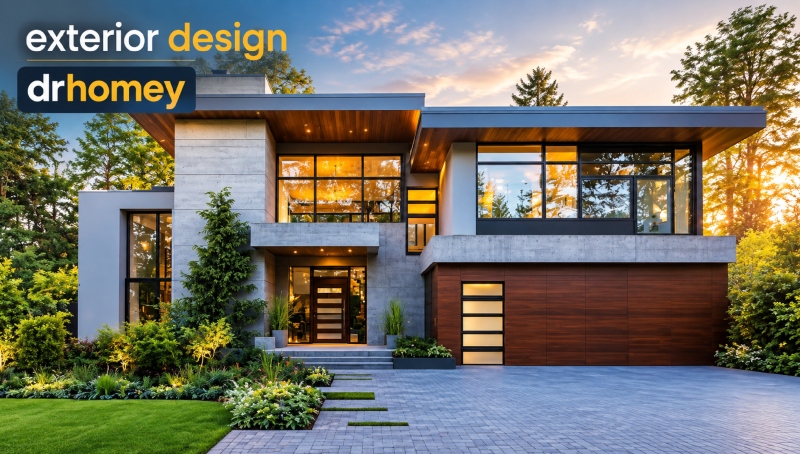
Some houses make you slow down as you walk past. Others disappear into the street. The difference is almost never money — it is decisions. Exterior design DrHomey is built on that observation. Instead of treating your facade, front door, lighting, and garden as separate jobs, it treats them as one system where every choice reinforces the next. The result is a home exterior that looks deliberately designed, survives British weather, and quietly adds thousands to your property’s value.
This guide gives you the complete playbook: materials ranked for the UK climate, colour formulas that actually work on British brick and render, front elevation design principles, lighting placement, landscaping, real 2026 cost figures, and the mistakes that waste money. Everything here is written for UK homes — from Victorian terraces to new-builds.
Quick Answer
Exterior design DrHomey is a homeowner-focused framework that plans a property’s facade, colour scheme, entrance, outdoor lighting, and landscaping as one coordinated system. It favours weather-resistant materials, a cohesive 60-30-10 colour palette, and low-maintenance finishes — improving curb appeal and resale value while cutting long-term upkeep costs for UK homes.
Quick Facts: Exterior Design DrHomey Overview
| Factor | Detail |
| Framework focus | Facade + colour + entrance + lighting + landscaping as one system |
| Ideal for | UK homeowners planning a refresh, makeover, or full re-clad |
| Cosmetic refresh cost | £3,000–£15,000 |
| Full transformation cost | £15,000–£40,000+ |
| Highest-ROI upgrade | Front door + entrance area |
| Best low-maintenance materials | Brick, natural stone, fibre-cement cladding |
| Colour rule | 60% walls / 30% secondary / 10% accents |
| Planning permission | Rarely needed; check conservation areas and listed status |
| Payback | Strong curb appeal can add an estimated 5–10% to perceived value |
What Is Exterior Design DrHomey?
Exterior design DrHomey is a structured method for designing a home’s outer appearance, defined by five connected pillars: facade materials, colour palette, entrance composition, lighting placement, and landscape and hardscape design.
Most exterior projects fail for one reason: fragmented decisions. A wall colour chosen in a showroom. A door chosen from a catalogue. Paving chosen at a builder’s merchant. Each choice is fine on its own — and jarring together.
The DrHomey method fixes this with a single test applied to every decision: does it strengthen the whole? That discipline is what separates homes that look “done up” from homes that look designed.
It also starts where good design always starts — with constraints. In the UK, those constraints are architecture and weather. A silicone render that performs beautifully in a dry climate will stain and hairline-crack through three Scottish winters. Timber cladding that looks effortless in a magazine needs re-treatment every two to three years in Cornwall’s rain. Design that ignores climate is just expensive decoration.
The Five Pillars of a Stylish Home Exterior
Every strong home facade design — from a minimalist house exterior to a period restoration — rests on the same five pillars:
- Structure and surfaces — cladding, render, brick, stone, and roofline.
- Openings — windows and doors, their proportions, and frame colours.
- Colour — one cohesive exterior colour palette, not five competing ones.
- Light — outdoor lighting ideas executed in layers, not a single porch bulb.
- Setting — landscaping, driveway design, and the path to the door.
Get all five right and the house looks expensive even when it wasn’t. Get three right and it looks half-finished.
Exterior Materials and Finishes: What Actually Survives the UK Climate
Exterior materials and finishes are the weather-facing surfaces of a home — brick, render, cladding, stone, and timber — each carrying a different balance of lifespan, cost, and upkeep.
Here is the honest 2026 comparison for British conditions:
| Material | Lifespan | Upkeep | Installed Cost / m² | Best Use |
| Facing brick | 100+ yrs | Almost none | £80–£130 | Nearly every home style |
| Natural stone exterior | 100+ yrs | Almost none | £120–£200 | Period homes, premium facades |
| Fibre-cement cladding | 40–50 yrs | Low | £70–£110 | Contemporary exterior design |
| Silicone render | 25–30 yrs | Low | £50–£90 | Smooth, minimalist house exterior |
| Timber / wood siding | 20–30 yrs | Medium-high | £60–£100 | Scandinavian and rustic looks |
| uPVC cladding | 20–30 yrs | Almost none | £40–£70 | Budget exterior makeover ideas |
Three rules from real projects:
- Exposed locations punish weakness. Coastal and northern homes should default to brick, stone, or fibre-cement. Save timber for sheltered elevations.
- Cheap render is the most expensive render. Low-grade monocouche stains within two winters. Silicone-through-coloured render costs about 20% more and lasts twice as long.
- Mixed materials beat single materials. A brick ground floor with a fibre-cement upper storey adds depth for modest cost — one of the most reliable modern exterior design moves of the past five years.
Exterior Colour Combinations: Formulas That Work on British Homes
Exterior colour combinations are coordinated sets of wall, trim, and accent colours chosen to suit a home’s architecture, materials, and street setting.
The professional’s shortcut is the 60-30-10 rule:
- 60% dominant wall colour — warm white, soft grey, natural brick
- 30% secondary surfaces — cladding panels, gable ends, rendered plinths
- 10% accents — front door, window frames, fascia
Four palettes proven on UK homes:
- Warm off-white render + anthracite cladding + sage green door — the contemporary classic
- Natural red brick + off-white trim + navy door — safest for period terraces
- Pale grey render + cedar wood siding accents + black frames — modern house exterior staple
- Cream stone + charcoal roofline + deep red door — country and conservation-friendly
One hard-won lesson: pure brilliant white render looks spectacular for about eighteen months. Then road film, algae shading, and splash-back turn it tired. Off-whites — think wevet, slipper, or warm ivory tones — hold their look for years longer on British roads.
Front Elevation Design and House Entrance Ideas
Front elevation design is the composition of windows, door, roofline, and proportions on your home’s street-facing side — and pound for pound, it delivers the highest visual return of any exterior work.
The entrance hierarchy, in order of impact:
- The door. Front door design ideas start with quality: a composite door (£900–£1,800 installed) changes the entire facade. Contemporary homes suit oversized doors with a single vertical glass panel; period homes suit traditional panelled designs in heritage colours.
- The approach. A clear, well-lit path with planting on both sides creates a “processional” feel. Symmetry flatters nearly every facade ever built.
- The shelter. Porch design ideas don’t need to be grand — even a flat canopy porch adds shadow lines and depth to a flat facade, and keeps visitors dry while they find their keys. In the UK, that is function, not luxury.
- The frame. Matching window frame colours across the whole house front design is the single cheapest way to make an exterior look intentional. Mixed white and brown frames read as accidental; one consistent colour reads as designed.
Outdoor Lighting Ideas: The Three-Layer Method
Exterior lighting placement is the deliberate positioning of fixtures to handle safety, beauty, and atmosphere after dark — the hours when most guests and buyers actually see your home.
The three-layer method:
- Layer 1 — Task: A wall light beside the door, plus low-level path lights. Nobody should walk to your door in darkness.
- Layer 2 — Accent: One or two uplights on a feature — a tree, a stone wall, exterior architectural details. Restraint is the skill here; two accents look curated, ten look like an airport.
- Layer 3 — Ambient: A soft wash across the facade itself, so the house glows rather than glares.
Specification matters: choose warm white (2700–3000K), IP65-rated fittings, and LED throughout. Energy-efficient exterior features like dusk-to-dawn sensors and timers mean the whole scheme runs for a few pounds a year. Cold 6000K lighting is the fastest way to make a beautiful home look like a car park.
Landscaping for Home Exteriors: Where Design Meets the Street
Landscape and hardscape design combines planting with paving, walls, and driveways — the frame that presents your house to the street.
- Driveway design: Permeable resin-bound gravel is the current UK favourite for good reason. It drains through UK downpours, looks crisp against both brick and render, and — because it is permeable — usually avoids the planning permission required for non-permeable front paving over 5m² in England.
- Front gardens: Low, structured planting suits modern homes: clipped evergreens, ornamental grasses, gravel beds. Period brick wants softer, cottage-style planting. Match the planting to the architecture, not to a garden centre display.
- Outdoor living spaces: A small front terrace with two chairs extends your functional outdoor space and signals a home that is used and loved — buyers notice, even if they can’t say why.
Exterior Makeover Ideas: The 2026 Budget Playbook
The most common renovation regret is doing work in the wrong order — painting before re-rendering, or landscaping before the driveway is dug up. Use this tiered plan:
| Budget Tier | What to Do | What to Expect |
| Under £1,500 | Paint the front door, new house numbers, path lighting, structured planting refresh | A transformed first impression in one weekend |
| £1,500–£5,000 | New composite door, masonry paint refresh, canopy porch, bin and bike storage screen | 1–2 trades, 1–2 weeks of work |
| £5,000–£15,000 | Cladding accent panels, new front windows, driveway resurfacing, full three-layer lighting | Worth paying for a designer’s hour |
| £15,000+ | Full re-render or re-clad, roofline and guttering refresh, complete landscape redesign | Check planning status before committing |
The correct order of operations: structure and cladding first, then windows and doors, then paint, then lighting, and landscaping dead last. Reverse that order and you will pay twice for the same surfaces.
The Seven Costliest Exterior Design Mistakes
After the tables, the truth. These are the errors that burn money on UK projects:
- Choosing colours from a screen. Paint a metre-square test patch and check it in morning and evening light. British overcast light flattens colours that look rich indoors.
- Ignoring the neighbours. Your facade should be the best version of the street’s style, not a protest against it.
- Buying cheap render. Covered above — and worth repeating.
- Over-lighting. More fixtures, less taste. Two accents beat ten.
- Forgetting maintenance access. That stunning render behind the guttering will stain if the downpipe can never be cleaned.
- Skipping the planning check. Most exterior work is permitted development — but listed buildings, conservation areas, and flats play by stricter rules. A five-minute call to your local planning authority beats an enforcement notice.
- Landscaping first. Plants get trampled by scaffolding. Every time.
Frequently Asked Questions
What is exterior design DrHomey?
Exterior design DrHomey is a framework that plans a home’s facade, colour scheme, entrance, lighting, and landscaping as one coordinated system — prioritising curb appeal, UK-weather durability, and low maintenance.
How much does a home exterior makeover cost in the UK in 2026?
A cosmetic refresh typically runs £3,000–£15,000, while a full transformation with re-cladding and landscaping costs £15,000–£40,000 or more, depending on house size and material choices.
Do I need planning permission to change my house exterior in the UK?
In most cases no — painting, cladding, and rendering usually fall under permitted development — but listed buildings, conservation areas, and flats face stricter rules, so always confirm with your local planning authority first.
What is the most low-maintenance exterior design approach?
Brick or natural stone walls, fibre-cement accents, a composite door, powder-coated aluminium windows, and LED lighting on sensors — this combination can go a decade with little more than an annual wash-down.
Which exterior wall colours are best for resale value?
Warm off-whites, soft greys, and exposed natural brick appeal to the widest buyer pool, while bold wall colours tend to narrow resale appeal even when beautifully executed.
What is the 60-30-10 rule in exterior design?
It is a colour formula: 60% of the facade in a dominant wall colour, 30% in a secondary material or shade, and 10% in accents such as the front door and window frames.
How can I improve my home’s curb appeal on a small budget?
Paint the front door, add path lighting, clean or re-gravel the driveway, and plant symmetrical evergreens by the entrance — all four for under £1,500, mostly DIY.
Is timber cladding worth it in the UK climate?
Yes, if you accept the maintenance: timber delivers warmth no render can match, but it needs re-treatment every two to three years in wet regions, so choose durable species like western red cedar or Siberian larch.
What is the best outdoor lighting for a house exterior?
Warm-white (2700–3000K) IP65-rated LED fittings arranged in task, accent, and ambient layers give the best balance of safety, kerb-side beauty, and near-zero running costs.
Can a modern exterior design work on a period home?
Yes — when it respects the original proportions and materials: keep period brick exposed, use restrained render elsewhere, and choose slim-framed windows in a single dark colour rather than covering the facade entirely.
Final Word: Build an Exterior That Still Looks Right in 2036
The houses that stop you mid-stride share one quality — nothing on them is accidental. That is the whole philosophy behind exterior design DrHomey: materials chosen for the British climate, one disciplined colour palette, an entrance treated as the hero, light placed in layers, and landscaping that frames the architecture instead of hiding it.
Start this weekend with a camera and a notepad. Photograph your front elevation. List what stays and what goes. Match your ambition to a budget tier from the playbook above, and follow the order of operations — structure, openings, paint, light, planting.
Do it in that order, and your home will still look considered a decade from now. That, in the end, is the only real test of exterior design.
Visit blogblueflamepublishing for more details.